سورس کد adbGUI Wrapper برای Android Debug Bridge (ADB) نوشته شده در C# سی شارپ
این توضیحات بصورت خودکار ارسال شده است برای دانلود فایل به سایت اصلی که لینک دانلود در پایین قرار داده شده است بروید
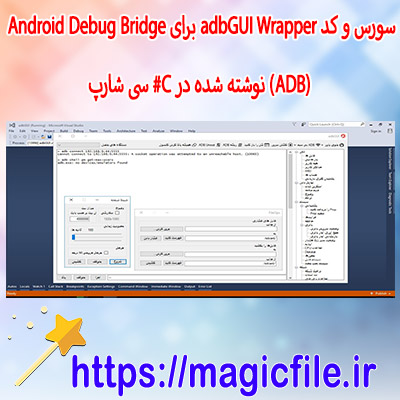
SOURCES CODE ADBGUI WRAPPER FOR ANDROID DEBUG BRIDGE (ADB) IN C#
The development of tools that facilitate communication between computers and Android devices has become increasingly essential, especially for developers, testers, and tech enthusiasts. Among these tools, the Android Debug Bridge (ADB) stands out as a vital utility, providing command-line access to perform various device management tasks. To make the interaction more user-friendly and accessible, developers often create graphical user interface (GUI) wrappers around ADB, streamlining operations like installing applications, debugging, or transferring files. One such project is the "ADBGUI Wrapper," crafted in C# (C-Sharp), a versatile and powerful programming language primarily used within the Microsoft .NET framework. This wrapper acts as an intermediary, simplifying ADB commands through an intuitive GUI, reducing the need for manual command-line inputs.
THE IMPORTANCE OF ADB AND THE NEED FOR GUI WRAPPERS
Android Debug Bridge (ADB) is an essential command-line tool that facilitates various device management functions. It enables developers to sideload apps, access device logs, push and pull files, and perform other debugging activities. However, while ADB is robust, its command-line interface can be intimidating for beginners or users unfamiliar with terminal commands. This challenge prompted developers to develop GUI wrappers, which act as a bridge—hence the name—making these functionalities more approachable, especially for those who prefer visual interactions over text-based commands.
The "ADBGUI Wrapper" in C# serves this exact purpose. It transforms complex commands into button clicks, menus, and visual indicators, making device management more efficient and less error-prone. Moreover, integrating ADB within a GUI application offers additional features like progress bars, error notifications, and batch operations that are cumbersome in pure command-line environments.
OVERVIEW OF THE COMPONENTS AND ARCHITECTURE
The core of this wrapper involves a combination of several components working harmoniously:
- User Interface (UI): Built with Windows Forms (WinForms) or Windows Presentation Foundation (WPF), the GUI provides buttons, text boxes, dropdowns, and status labels for interaction. It allows users to select devices, execute commands, and view real-time feedback.
2. ADB Integration Layer: This layer manages communication with the ADB executable. It invokes command-line processes, sends commands, and captures output. It ensures asynchronous execution, preventing the UI from freezing during long operations.
3. Device Detection Module: It scans for connected Android devices via ADB commands, populating device lists dynamically. This module refreshes device status, handles disconnected devices, and displays relevant device info.
4. Command Execution and Parsing: This component formulates valid ADB commands based on user input, executes them, and parses the results to display meaningful feedback. It also handles error detection and recovery.
5. Error Handling and Logging: Critical for stability, this part logs all activities, captures errors, and provides clear notifications to users, ensuring transparency and ease of troubleshooting.CORE FUNCTIONALITIES IMPLEMENTED IN THE WRAPPER
The wrapper encompasses several essential functionalities, each designed to enhance usability:
- Device Management: Detects, lists, and manages multiple devices simultaneously. Users can select specific devices or perform batch operations on all connected devices.
- File Transfer: Simplifies pushing and pulling files from the device. For instance, users can transfer APK files for ins... ← ادامه مطلب در magicfile.ir